
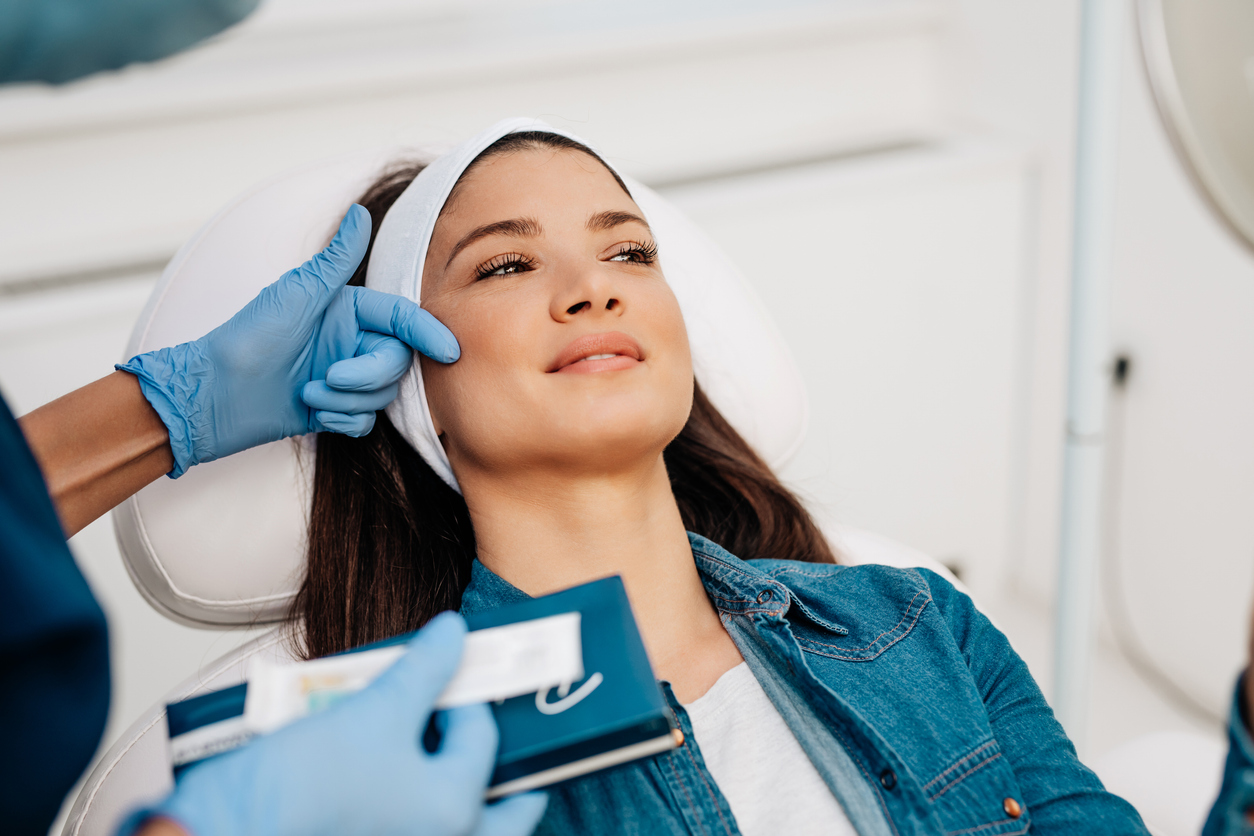
Fat grafting often delivers the most organic, longer-lasting restoration by using your own tissue, while fillers provide precise, non-surgical refinement with minimal downtime. In many cases, the most natural result comes from a strategic combination of both.
At our Beverly Hills practice, Dr. Robert Cohen—a board-certified plastic surgeon recognized for his artistic precision and personalized treatment planning—approaches facial rejuvenation with this exact philosophy. Rather than relying on a one-size-fits-all solution, he evaluates how volume loss, skin quality, and facial structure interact, then selects or combines treatments to restore balance in a way that looks effortless and authentic.
Below, we break down how fat grafting and fillers compare, when each is most effective, and how to determine which option will deliver the most natural result for you.
Why Volume Matters in Facial Aging
Facial aging is largely driven by volume loss and structural changes beneath the skin, not just surface wrinkles. Over time, multiple layers of the face change simultaneously, leading to a less defined, more hollow, and fatigued appearance.
These changes include:
- Fat loss and descent: Deep facial fat pads shrink and shift downward, especially in the cheeks and under-eye area
- Collagen and elastin decline: Skin becomes thinner, less firm, and more prone to lines and laxity
- Bone resorption: Subtle loss of facial bone support reduces structural definition, particularly along the jawline and midface
- Skin laxity: Reduced elasticity allows tissues to sag rather than hold youthful contours
According to the National Institutes of Health, age-related facial changes are closely tied to volume depletion and redistribution, particularly in the midface and jawline. This explains why common concerns include flattened cheeks, deepened folds, and diminished jawline definition.
As a result, modern facial rejuvenation focuses on restoring lost volume at the structural level, rather than simply tightening the skin, which can lead to an unnatural appearance if done in isolation.
Both fat grafting and fillers are designed to address this core issue but they do so in fundamentally different ways, which directly impacts how natural, refined, and long-lasting your results will be.
What Is Fat Grafting?
Fat grafting (also called fat transfer) uses your body’s own fat to restore lost facial volume. Fat is harvested—typically from the abdomen or thighs—purified, and then carefully injected into areas like the cheeks, temples, or jawline.
Key Advantages
- Uses your own tissue, eliminating risk of allergic reaction
- Long-lasting results, as surviving fat integrates into the tissue
- Improves skin quality and texture over time
- Allows for larger volume restoration in a single procedure
- Research published in the National Library of Medicine shows that autologous fat transfer can provide durable volume restoration with high patient satisfaction when performed with proper technique
Considerations
- Requires a minor surgical procedure
- Some fat may be reabsorbed, occasionally requiring touch-ups
- Results develop gradually as swelling resolves and fat stabilizes
- Fat grafting is often ideal for patients seeking comprehensive, long-term rejuvenation with the most natural material available
What Are Dermal Fillers?
Dermal fillers are injectable treatments designed to restore volume, smooth lines, and enhance contours. Most are made from hyaluronic acid (HA), a substance naturally found in the body that helps maintain hydration and structure.
Key Advantages
- Non-surgical, with treatments typically completed in 15–30 minutes
- Immediate results with little to no downtime
- Highly precise and customizable
- Reversible (for most HA fillers)
- According to the U.S. Food and Drug Administration (FDA), dermal fillers are widely used for facial volume restoration and contouring when administered by qualified professionals
Considerations
- Temporary results (typically 6–24 months depending on the product)
- May require maintenance treatments over time
- Less suitable for large-volume restoration
- Fillers are often best for patients who want subtle, targeted enhancement or prefer a non-surgical option
Fat Grafting vs. Fillers: Key Differences
| Category | Fat Grafting | Fillers |
| Longevity | Long-lasting; surviving fat can be permanent | Temporary; required maintenance treatments |
| Procesure Type | Minimally invasive surgical procedure | Non-surgical injectable treatment |
| Material | Your own fat (autologous) | Biocompatible substances (commonly hyaluronic acid) |
| Precious vs. Volume | Best for restoring broader, structural volume loss | Ideal for precise contouring and smaller areas |
| Downtime | A few days to a week of mild recovery | Minimal to no downtime |
When Is a Combination Approach Best?
In many cases, the most natural result comes from combining both treatments. For example:
- Fat grafting can restore foundational volume
- Fillers can refine contours and address smaller details
This layered approach allows for both structural correction and aesthetic refinement, resulting in balanced outcomes from every angle.
How Dr. Cohen Determines the Right Approach
The decision comes down to a careful assessment of how and where volume loss is affecting your features, along with the quality of your skin and the level of change you’re seeking.
In consultation, Dr. Robert Cohen analyzes:
- The specific areas and depth of volume depletion
- Skin integrity and elasticity
- Overall facial balance and proportions
- Your preference for temporary refinement or longer-lasting correction
Dr. Cohen brings a highly trained, detail-oriented perspective shaped by his Ivy League education at Dartmouth-Hitchcock Medical Center, where he trained alongside leading experts in plastic and reconstructive surgery. As a board-certified plastic surgeon who personally oversees all injectable and fat grafting treatments, he applies both surgical precision and aesthetic judgment to every plan.
Recognized as a Castle Connolly “Top Doc” and known for his refined, natural results, Dr. Cohen approaches facial rejuvenation with a focus on structural harmony—enhancing volume in a way that preserves your identity rather than altering it.
Contact us today to schedule your consultation and discover the approach that’s right for you.